What each study found
Kisspeptin research: what changed in each study.
Human findings come first, then work in animals and cells. Even the 29-trial review leaves major gaps for your care.
What doctors measured before calling it an effect
The first human studies checked a blood hormone that directs the ovaries or testes. A rise showed that the sex-hormone chain had started. Kisspeptin begins that chain in the brain. Brain cells release one hormone, which reaches a small gland under the brain. Two more hormones then leave the gland. The ovaries or testes receive that message.
A fault in the Kisspeptin system can stop puberty. Scientists first watched single brain cells to learn why. Human studies then found that Kisspeptin raised the next hormone in the chain. During a steady drip, however, that rise began to fade. Newer studies tested a nose spray and sexual response. Human results below are kept apart from work done with mice and dish-grown cells.
What Kisspeptin changed in a brain cell
Scientists put brain cells from mice in a dish. Kisspeptin attached to a working part on the cell surface. Calcium and other salts then moved across the cell wall. The cell switched on and released the first hormone in the sex-hormone chain [2]. Its electrical charge changed by 6 millivolts, a tiny measure of electricity, with results about 1 millivolt either way. The cells fired 87 percent more often, with results differing by about 4%, in roughly three-quarters of the cells [2]. None of this happened in a person.
Other animal work supports the link. Kisspeptin didn't raise the next two hormones in mice born without the working cell part. In sheep, Kisspeptin released the first hormone near the brain. The next blood hormone rose at the same time [14]. Scientists think a small group of brain cells controls that timing. That view is reasonable, but it isn't settled for your body.
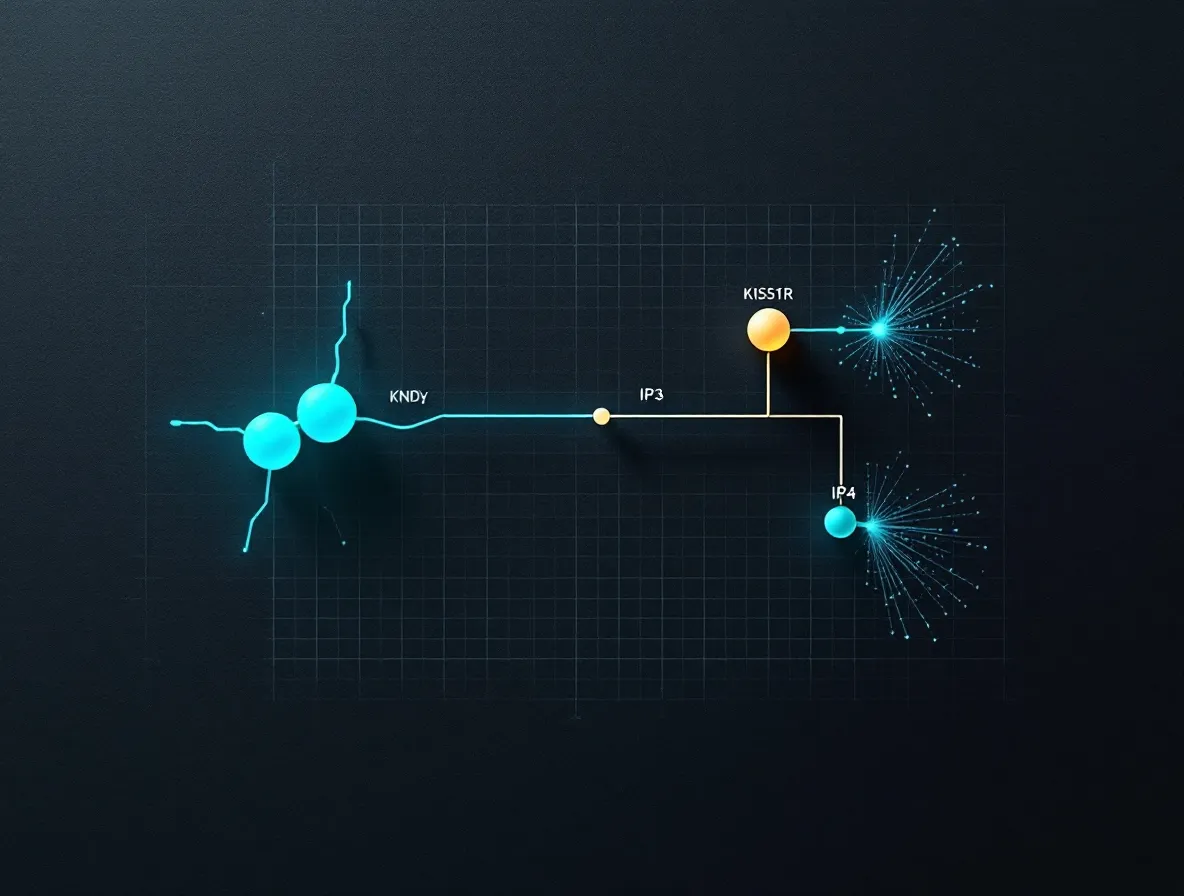
What Kisspeptin-10 changed in men's blood tests
Researchers put Kisspeptin-10 into a vein in healthy men. The quick amount supplied 1 microgram for every kilogram of body weight. It produced the strongest jump in the hormone directing the testes. Doctors could see the rise by 30 minutes [3]. A steady drip raised the same blood marker. Its bursts also came more often. At 4 micrograms for every kilogram each hour, blood testosterone then rose [3].
This Kisspeptin-10 change appeared clearly in one study. It doesn't set a dose for you. The amounts only tell us what researchers gave the men while doctors watched.
What changed for women with stopped periods or fertility care
One study followed women whose periods had stopped. A steady Kisspeptin-54 drip made an ovary-control hormone come in more bursts. During 8 hours, the bursts nearly tripled. Each one released about six times more hormone. At the highest amount, the effect faded while the drip continued [5].
A stage 2 trial, an early test of dose and safety, enrolled 60 women at high risk from fertility treatment. One Kisspeptin-54 shot was placed under the skin. The shot matured eggs in 95%. Doctors found no dangerous ovary swelling classed as moderate, severe, or critical. The highest live-birth result was 62%, but that doesn't show the safest amount [6]. A drip under the skin also raised two ovary-control hormones in healthy women. Starting estrogen helped predict how far the first hormone would rise [10].
What Kisspeptin changed during sexual-response tests
A fair trial enrolled 32 men with very low sexual desire. Each man received Kisspeptin-54 and a placebo at separate visits. A placebo looks like treatment but contains no drug. The men didn't know which one they received. Kisspeptin changed how their brains responded to sexual sights. Penis swelling rose by up to 56% over placebo. The men also reported more desire, and doctors saw no harm during the trial [8].
A related trial enrolled 32 women before menopause. Kisspeptin-54 changed how their brains handled attraction and sexual dislike [9]. In male mice, scientists switched on brain cells producing Kisspeptin. The mice showed more interest in females and stayed with them longer. They also acted less anxious [11]. Mouse behavior can't predict a benefit for you.
What the newest Kisspeptin studies did not settle
In 2025, a Kisspeptin-54 nose spray made the ovary-or-testis control hormone climb in three groups. Those groups were healthy men, healthy women, and women whose periods had stopped. Doctors saw no harm during the short study. Tests also found that the spray kept its strength for up to 60 days at 4 degrees C [16]. That storage result doesn't prove safe home use.
A 2025 review counted 29 Kisspeptin trials [7]. They covered missed periods, puberty, ovary work, fertility, birth, and breast-feeding. The comparison drugs caused more reported side effects than Kisspeptin. The review also confirmed that Kisspeptin lacks health-agency approval. Another 2025 trial, with 95 people, found a strong hormone rise. Anxiety, a stress hormone, blood pressure, and heart rate showed no clear change [11]. This remains stage 1/2 work from a few centers. Larger, separate stage 3 trials haven't been done.