What your body makes
What is Kisspeptin, and what does it start?
Written instructions in your cells make this protein. It starts hormone releases, and one study form remains longer than the other.
What your body releases after Kisspeptin arrives
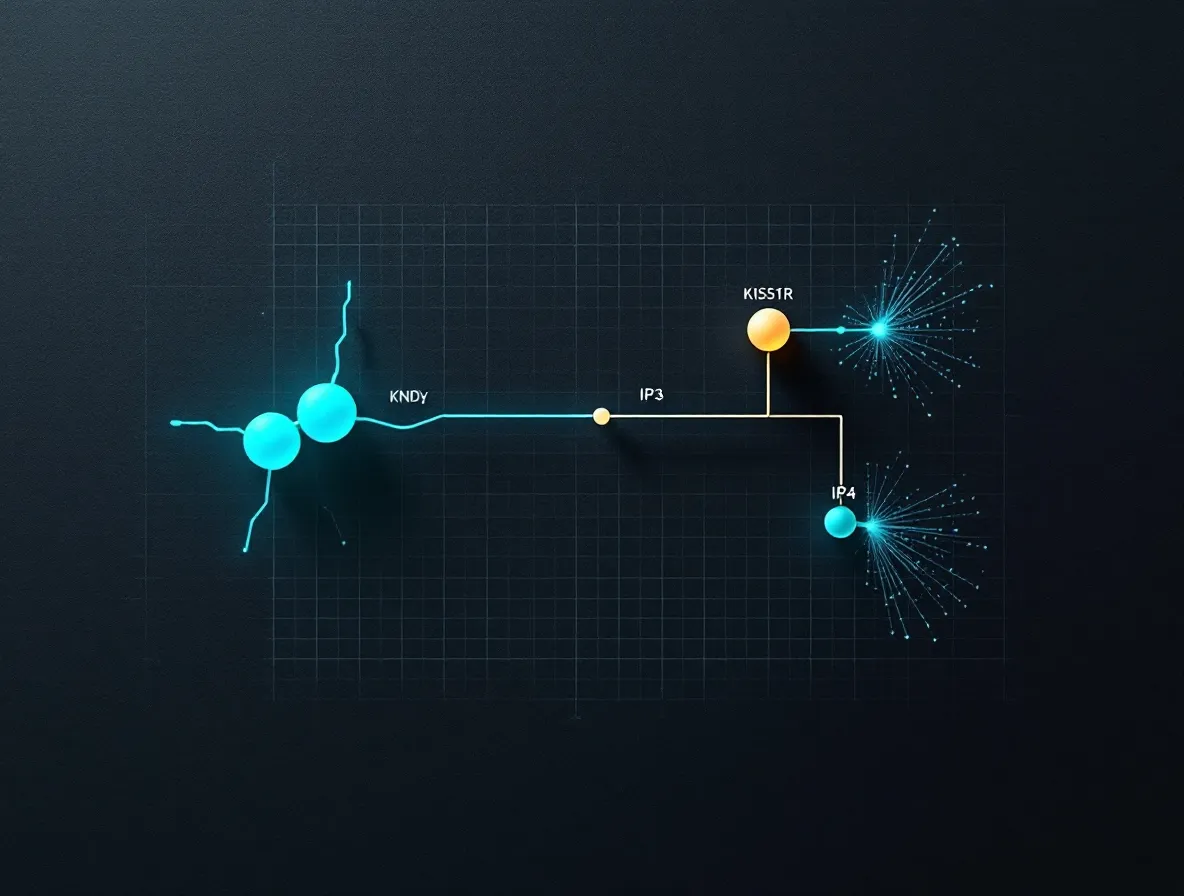
Studies found that Kisspeptin begins a chain of hormone releases. Your body follows written instructions in its cells to make this protein. It attaches to certain brain cells. Those cells send one hormone toward a small gland below the brain. More hormones come from that gland. Testosterone or estrogen appears near the chain's end.
Kisspeptin supplies neither testosterone nor estrogen. Instead, it asks your body for its own hormone releases. Nor is Kisspeptin a vitamin or food product. The phrase "kisspeptin supplement" is a poor fit. Kisspeptin is still a test drug. Its two main study forms are Kisspeptin-10 and Kisspeptin-54. The main difference is how long each stays in your body.
What is Kisspeptin made from inside your body?
The answer to "What is Kisspeptin?" begins with written instructions in a cell. They sit on chromosome 1. That number is only an address inside the cell; it doesn't predict your health. The body first makes a 145-amino-acid protein. Amino acids are the building blocks of protein. The body cuts it into a 54-residue form called Kisspeptin-54; residue here means one protein part. Shorter forms are made too.
Your brain, placenta, ovaries, and testes can make Kisspeptin. In the brain, the protein starts hormone bursts that lead to sex hormones [4]. People and mice born without the working cell part that receives it don't enter puberty [4]. This clearly shows that the body needs Kisspeptin. It doesn't prove that taking extra will help you.
What Kisspeptin-10 does during a short test
Kisspeptin-10 is the shortest working form of the larger protein. It keeps the final ten amino acids, the building blocks of protein. Scientists first noticed related Kisspeptin while studying slower cancer spread. The old lab names don't explain what this test drug does, so they aren't useful here.
Researchers used Kisspeptin-10 in several studies of men. A quick vein dose of 1 microgram for every kilogram a man weighed gave the largest rise in the testes' control hormone [3]. The body clears Kisspeptin-10 in about 4 minutes. Its short stay gives a brief effect. A steady drip keeps it present longer, but the blood change may weaken.
What Kisspeptin-54 does during a longer test
Kisspeptin-54 is the 54-residue form, meaning the longer protein. Scientists studying cancer gave the protein an older name in 1996. That name doesn't tell you how it works. Kisspeptin-54 is larger than Kisspeptin-10. Enzymes, which break proteins down, need longer to clear it. Kisspeptin-54 remains in the blood for about 27 to 28 minutes.
That longer stay suited fertility and brain studies. One fertility trial found its best result after a single shot [6]. Other work used Kisspeptin-54 to restart the ovary-control hormone bursts after periods had stopped [5]. Sexual-response studies used it too [8]. Researchers split the work between Kisspeptin-10 and Kisspeptin-54. Kisspeptin-10 gave a quick rise; Kisspeptin-54 lasted longer. Some papers use shortened lab names, but those labels don't change the finding.
Why Kisspeptin supplement is a misleading name
The phrase "Kisspeptin supplement" sounds harmless and familiar. It isn't accurate. A supplement is a food product, such as a vitamin or herb. Kisspeptin is a protein being tested as a drug. It acts early in the body's control of sex hormones. No use has health-agency approval [7].
Human studies used shots, steady vein drips, and a nose spray. They didn't test a daily wellness pill. Doctors watched the people and used carefully made drug material. Calling Kisspeptin a supplement hides both facts. If an advertisement uses that phrase, remember the difference.